

In Conversation with Afsoon: The Rising Persian Chef Bringing Pop-Up Feasts to Windsor

Afsoon is one of those rare people whose warmth fills a room long before the food reaches the table. Based in Windsor, Berkshire, she is a devoted mother of two and a natural storyteller who brings the flavours of her Persian heritage to the table with grace and ease, making every meal feel both intimate and celebratory.
Cooking has always been her language of love. First for her own family and now for the growing circle of guests who follow her pop-up dinners. Whether she is serving saffron-scented rice in handcrafted copper pots or presenting her slow-cooked lamb alongside a glass of elegant Austrian Blaufränkisch, Afsoon turns every gathering into a feast of culture and hospitality. Since settling in Britain she has drawn praise from food lovers and chefs alike, working alongside talents such as Giancarlo Caldesi and hosting elegant one-night restaurants that leave guests eager for her next appearance. With her blend of family-rooted tradition and a rising chef’s flair, Afsoon is quickly becoming a name to watch and her Persian pop-ups are an invitation no food lover should miss.
How did you first begin cooking?
I was the youngest child in the house. My father passed away when I was four, and my grandmother moved in with us. She was a traditional cook, an incredible baker, and had raised nine children of her own. Very soon, she pulled me into the kitchen. By the time I was seven, I was helping with the rice, adding salt, stirring pots. By the age of ten, I could cook small meals on my own. Cooking was never just about food, it was about family. For me, it was a way to make my mother happy. After a long day of work, she would come home and I wanted her to find the house clean, dinner ready, and something creative waiting for her. Seeing her smile and say “well done” meant everything.
What influence did your family have on your cooking?
Everyone cooked, but each in their own way. My mother, my aunts, my grandmother, they could all make the same stew, yet every version tasted different. One would add more saffron, another more cumin, another would use a lighter hand. That’s the heart of Persian food: not just recipes, but personal touches that make each dish unique. I grew up with strong palates around me. Even as a child, I noticed how a pinch of spice here or there could completely transform a meal.


Wine appears often in your memories. How was wine part of Persian life?
Wine has always been part of Persian culture for thousands of years. You can see it in carvings on the walls of ancient palaces, where soldiers carry trays with glasses, or in the excavations that uncover wine vessels. Even when alcohol became forbidden, families quietly kept the tradition alive. My uncle, for example, would go to the market and buy 30 or 40 kilos of black grapes. At home, he’d mash them in large glass jars and ferment them into wine. Others experimented with cherries or pomegranates. The wine was often cloudy, sometimes even warmed in winter and served with preserved meats. It was never about drinking to get drunk. It was about sharing, about warmth, about surviving the cold months together. I have also discovered how Austrian wines, especially a silky Blaufränkisch with dark cherry and subtle spice pair beautifully with my slow-cooked lamb. That freshness clears the palate and brings harmony to the dish.
You mentioned your grandmother also taught you baking. How did that begin?
In my mother’s region, baking was considered an essential skill for girls before marriage. My grandmother and mother were excellent bakers. I remember watching them seal pastries, their hands working quickly, the edges closing as neatly as braids. I wanted desperately to do it myself. At first, no one trusted me — if the pastry wasn’t sealed properly, the filling would spill out into the hot oil and ruin the batch. But one day, I sealed a pastry perfectly. My mother praised me, and I was overjoyed. From that moment, baking became a passion. Later, while at university, I discovered a Persian woman in a nearby village who was famous for her sweets. I spent 21 days with her, every morning at 7 AM, learning recipes in her cellar kitchen. She supplied sweets all over the world, and she taught me everything. I still have the notebook from those days, and I still use her recipes.


You studied food technology. Did that shape your career?
I studied food science and technology, but in truth it wasn’t about becoming a cook — it was about education and career opportunities. My real cooking journey developed alongside it. When I moved to Dubai, I worked in HR during the day, from 10 to 4. Then I came home to my children, helped with homework, made sure they were cared for. Once they were asleep, around 7:30, I began baking. I often baked until midnight or one in the morning: cakes and sweets for friends, then friends of friends, until it grew into a side business. In 2018, during Ramadan, I received an extraordinary order from the Chamber of Commerce: 120 kilos of sweets, worth £13,000. I had just 21 days to complete it. Every evening I worked, sometimes crying with exhaustion, surrounded by towers of boxes. But I did it. That moment gave me confidence that my cooking wasn’t just a hobby, it could be a business.
What brought you to cooking professionally in Berkshire?
When we moved here, friends loved my Persian food and kept asking where they could find it. I told them: you can’t, it’s homemade food. But they pushed me, saying, “Why don’t you cook it? We’ll buy it.” So I began Friday night takeaways, which led to working with chefs and eventually pop-up dinners. Step by step, opportunities grew. From Ascot to Giancarlo Caldesi in London, I’ve been able to share Persian food with new audiences.
How do you present Persian food at your pop-ups?
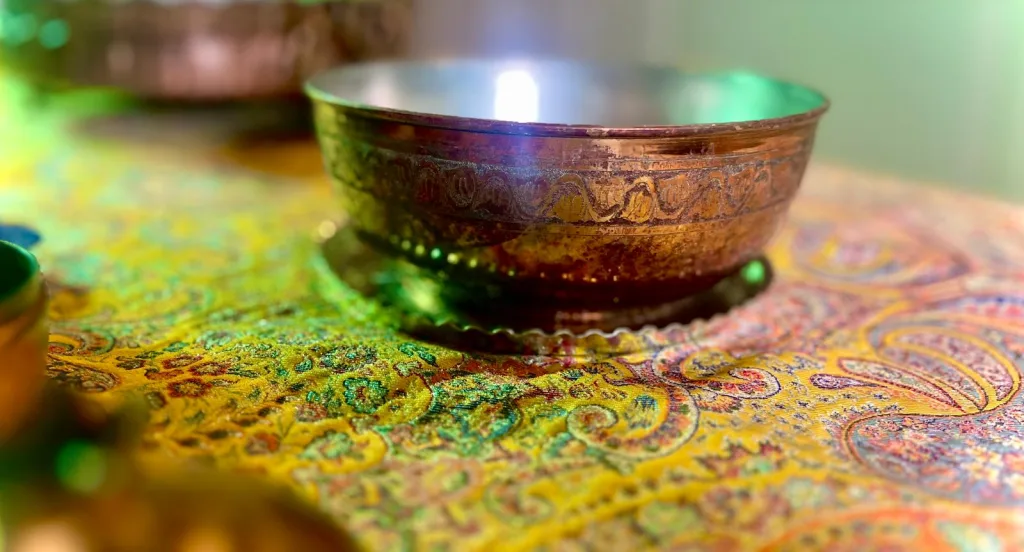
Presentation is part of the culture. I use handcrafted Persian tablecloths, silver and copper dishes, even traditional serving spoons. In my grandmother’s time, silver wasn’t just for guests — she believed it was healthier. We also believe cooking in copper is better, so I still use copper pots for rice and stews. Meals are always shared. Rice is the centrepiece, with stews, herbs, breads, and meats surrounding it. Everyone serves themselves and each other. The message is always: “please have more, there is always more.” That is Persian hospitality.


What role do spices play in your cooking?
Spices are everything. Meat is meat but it’s the spices that transform it. A slow-cooked lamb might have garlic and cinnamon, which sound unusual together, but they balance perfectly. Saffron, rose water, sumac, cumin: these are the heart of Persian cooking. I even teach my children about spices. I let them smell saffron, nigella seeds, sumac, rose water. Herbs and spices are medicine for us, so it’s important they grow up knowing their flavours.
How do Persian meals traditionally end?
Always with tea. Sometimes it’s tea with dates, sometimes nougat, but always tea — served in silver. Even if there’s no dessert, tea is essential. It closes the meal and the memory.
Do you dream of opening a restaurant?
No. My dream is exclusivity. I don’t want a big restaurant. I want to cook for fewer people but give them something unforgettable. Quality always over quantity. For me, cooking for ten people and making them remember the food is more rewarding than cooking for thirty and losing the soul of the dish. My dream is to host intimate pop-ups, maybe once a month, where people wait eagerly for the experience.


Thank you, Afsoon, for sharing your story and the flavours of Persia with us.
Her next pop-up supper is an experience you won’t want to miss. Follow her on Instagram @darya.eatery for the latest dates and dishes, each thoughtfully paired with Austrian wines.
Ben, Austrian Wine Room